Getting your trees through Sacramento storm season
The work that keeps a tree standing in January mostly happens in October. Here's what's worth doing before the wind arrives.
May 27, 2026 · 4 min read
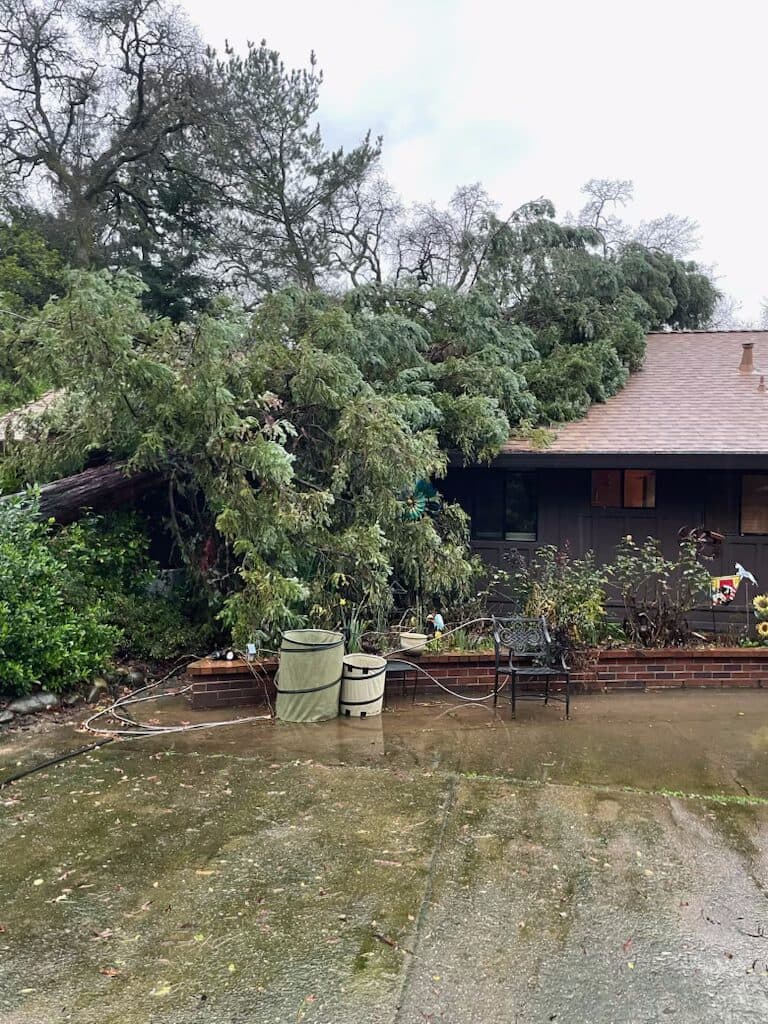
Sacramento's damage comes in two waves. Winter storms bring saturated soil and wind at the same time, which is when whole trees go over at the root plate. Summer brings sudden limb drop out of a clear sky, usually on mature oaks holding a lot of end weight.
You can't do much about the wind. You can do quite a lot about how much of a sail your tree presents to it, and how much dead weight is sitting in the canopy when it arrives.
Before the season
- Get deadwood out of the canopy — it's the first thing to come down and the most likely to hit something
- Reduce end weight on long, over-extended limbs, especially over roofs and driveways
- Thin the canopy enough that wind passes through rather than pushing the whole crown
- Check the trunk flare and root zone for conks, cracks, or heaving soil
- Clear gutters and drains so water isn't pooling at the root plate
What's not on that list is topping. Cutting a tree back to stubs creates fast, weakly attached regrowth and leaves you with a more dangerous tree in three years, not a safer one.
During the storm
Stay inside and away from windows on the side where the biggest trees are. If a tree comes down on the house, get everyone out of that part of the building and don't go up to look at the damage from the inside.
Never approach a downed power line, and assume any line on the ground is live. That's a call to the utility and 911, not to a tree service.
After
- Photograph everything before anything gets moved — your adjuster will want it
- Stay out from under limbs hung up in the canopy; they come down on their own schedule
- Don't cut anything under tension, and a fallen trunk is almost always under tension
- Call for emergency clearing if anything is on a structure or blocking access
We run emergency calls 24/7 and aim to be out the same day for anything dangerous. After a major wind event we triage by severity, and trees on occupied structures go first.
Or call (530) 845-1134 — no pressure, no obligation.